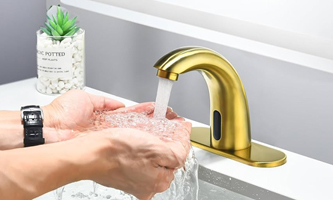
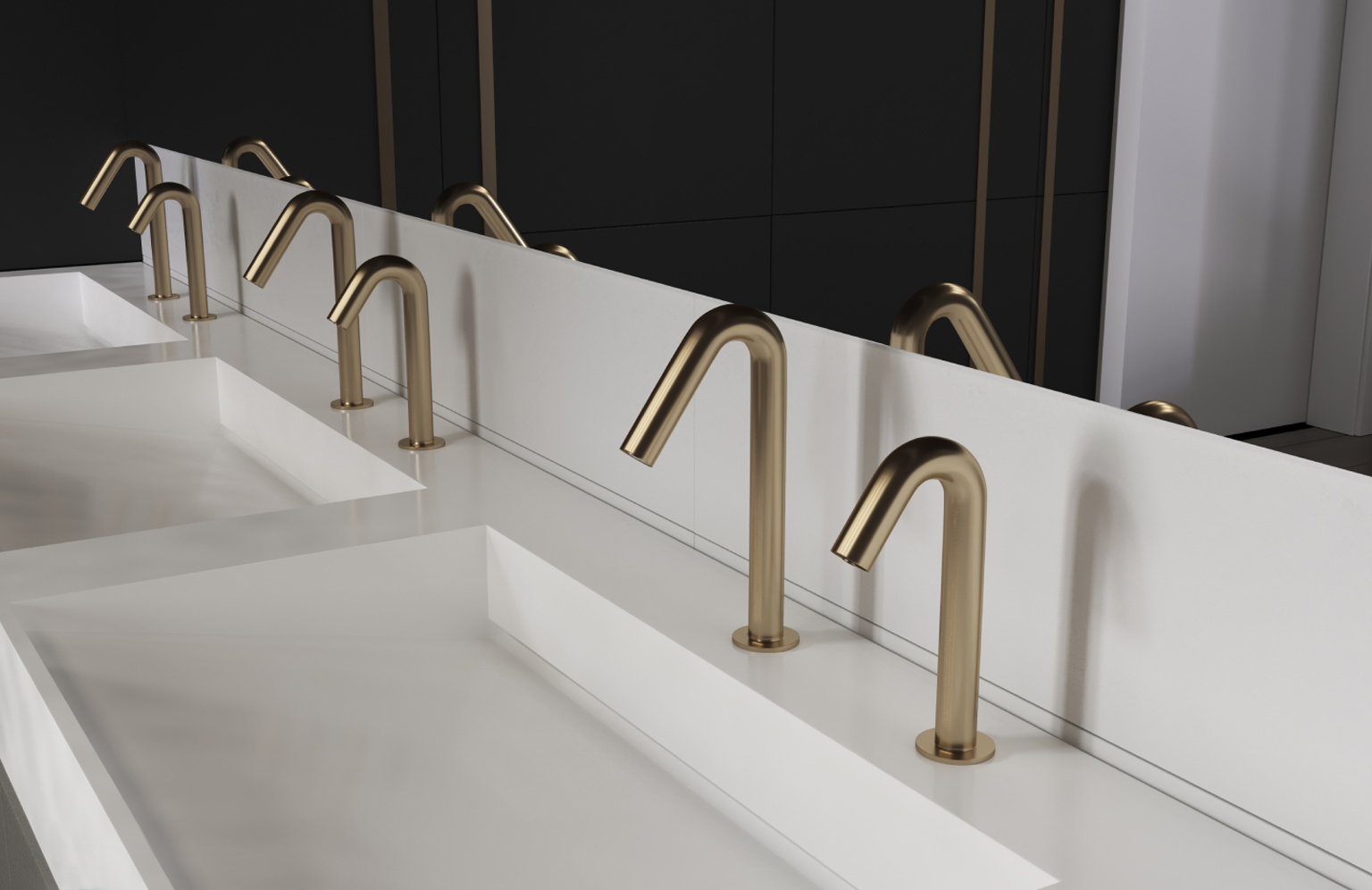
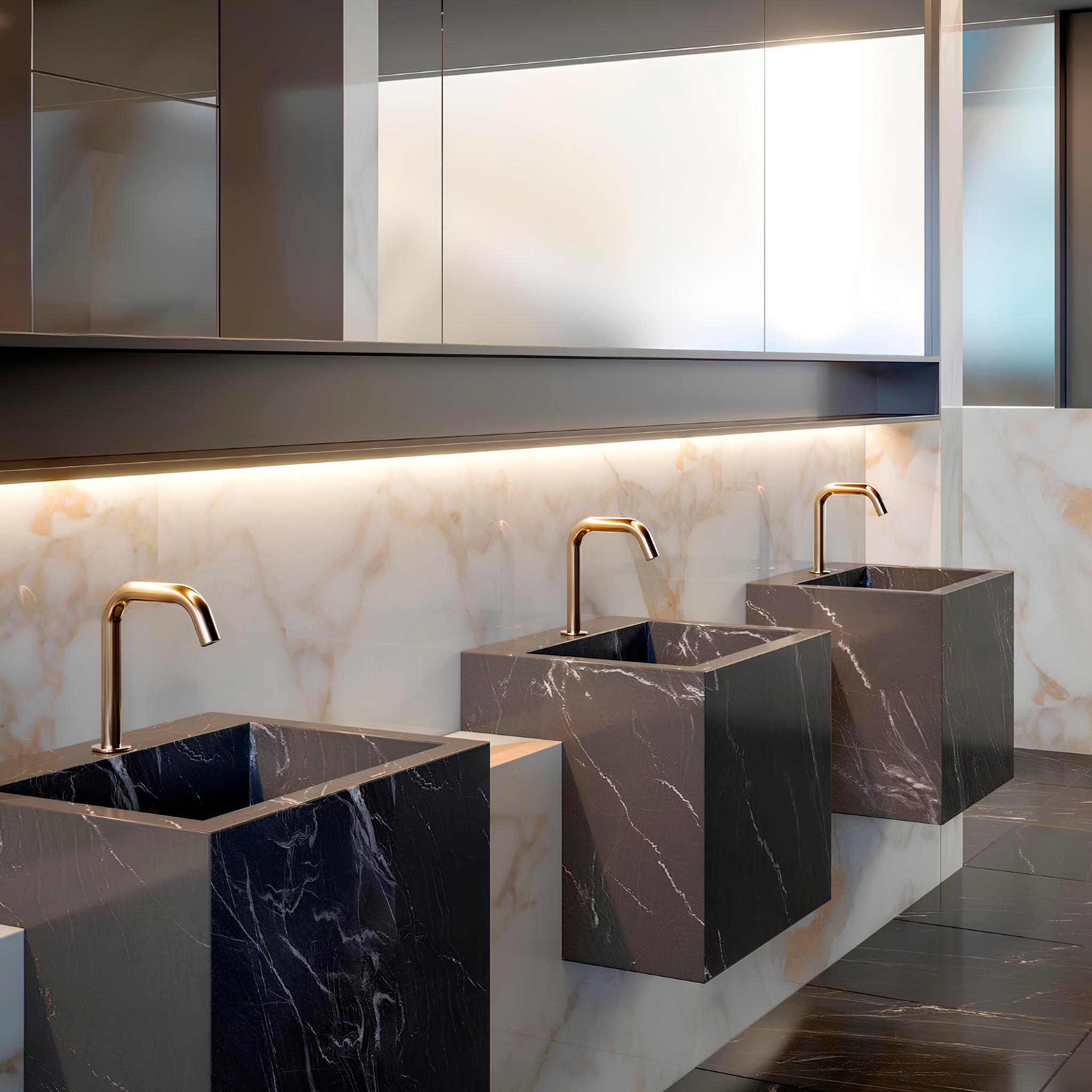
Sensor-activated mixers reduce touchpoints, control flow automatically, and keep restrooms moving—critical for arenas, airports, education, healthcare, and hospitality.
Hygiene & UX: IR/ToF sensing limits contact and false triggers; shut-off prevents overrun and mess.
Durability: Commercial brass bodies, vandal-resistant aerators, and sealed electronics for moist environments.
Efficiency: Low GPM with pressure-compensation; auto-timeouts curb water waste.
Compliance: ADA reach/clearance, WaterSense-level flows, and options to support LEED/WELL intents.
Serviceability: Accessible solenoids and power choices (battery, AC, or hybrid) streamline maintenance.
Spec Tips
Right-size flow (0.35–0.5 GPM typical for public lavs) and prefer laminar outlets in clinical zones.
Duty/purge cycles help stagnation control in intermittently used facilities.
Consider finish ecosystems to match dispensers, valves, and accessories across the project.
Each brand below is widely used in commercial washrooms. Selection typically depends on performance needs, finish ecosystem, local availability, and service support.
Deck or wall; spout reach/height; mixing type (tempered, TMV, thermostatic)
Confirm ADA clearances and sensor target zones.
Flow / Outlet
0.35–0.5 GPM typical; laminar in clinical areas
Pressure-compensating aerators stabilize user experience.
Power
Battery, AC, or hybrid; service access
Consider IP-rated enclosures for high-moisture rooms.
Controls
Duty/purge cycles; sensor range/timeouts
Helps stagnation control and water savings.
Finish Ecosystem
Match dispensers, dryers, valves, and accessories
Ensure consistent PVD/coat specs across vendors.
Documentation
Submittals, BIM/Revit, CSI specs, IOM
Standardize naming and link all PDFs on plan set.
Need a shortlist with submittal links? We can assemble a model-specific cut sheet pack.
FAQs
What flow rate should I target for public lavatories?
For most public lavs, 0.35–0.5 GPM balances hygiene, user throughput, and water savings. Verify local code and owner standards.
Battery or hard-wired power—what’s better?
Battery is flexible and fast to deploy; AC is ideal for continuous heavy traffic. Hybrid or energy-efficient platforms reduce service intervals.
How do I reduce false activations?
Specify precise sensor tech (e.g., ToF/IR) with adjustable range and timeouts; confirm counter geometry and basin reflectivity in mockups.
Do I need duty/purge cycles?
Recommended for intermittent use or clinical contexts to help mitigate stagnation and support hygiene protocols.
Which finishes are most resilient?
Commercial PVD finishes and stainless derivatives hold up well in high-traffic, cleaning-intense environments.
Spec-Grade · Brand-Ready · Code-Compliant
Top Touchless Faucet Brands for Commercial Restrooms
Explore architect-grade touchless faucet collections built for airports, healthcare, education, hospitality, and public venues. Compare brand ecosystems, sensor technologies (IR/ToF), and power options (battery, AC, hybrid) to meet ADA, WaterSense, and LEED/WELL objectives.
Top Touchless Faucet Brands for Commercial Restrooms — Spec Guide 2025
Commercial Restroom Spec Guide
Top Touchless Faucet Brands for Commercial Restrooms
Curated for architects, contractors, and facility teams focused on hygiene, durability, and code compliance.
ADALEEDWELLWaterSenseIP-rated options
Why Touchless in High-Traffic Restrooms?
Sensor-activated mixers reduce touchpoints, control flow automatically, and keep restrooms moving—critical for arenas, airports, education, healthcare, and hospitality.
Hygiene & UX: IR/ToF sensing limits contact and false triggers; shut-off prevents overrun and mess.
Durability: Commercial brass bodies, vandal-resistant aerators, and sealed electronics for moist environments.
Efficiency: Low GPM with pressure-compensation; auto-timeouts curb water waste.
Compliance: ADA reach/clearance, WaterSense-level flows, and options to support LEED/WELL intents.
Serviceability: Accessible solenoids and power choices (battery, AC, or hybrid) streamline maintenance.
Spec Tips
Right-size flow (0.35–0.5 GPM typical for public lavs) and prefer laminar outlets in clinical zones.
Duty/purge cycles help stagnation control in intermittently used facilities.
Consider finish ecosystems to match dispensers, valves, and accessories across the project.